
Yucca Fountain is (Not) Here
By: Maggie Bourque
Senior Lecturer, Haub School of Environment and Natural Resources
Where am I?
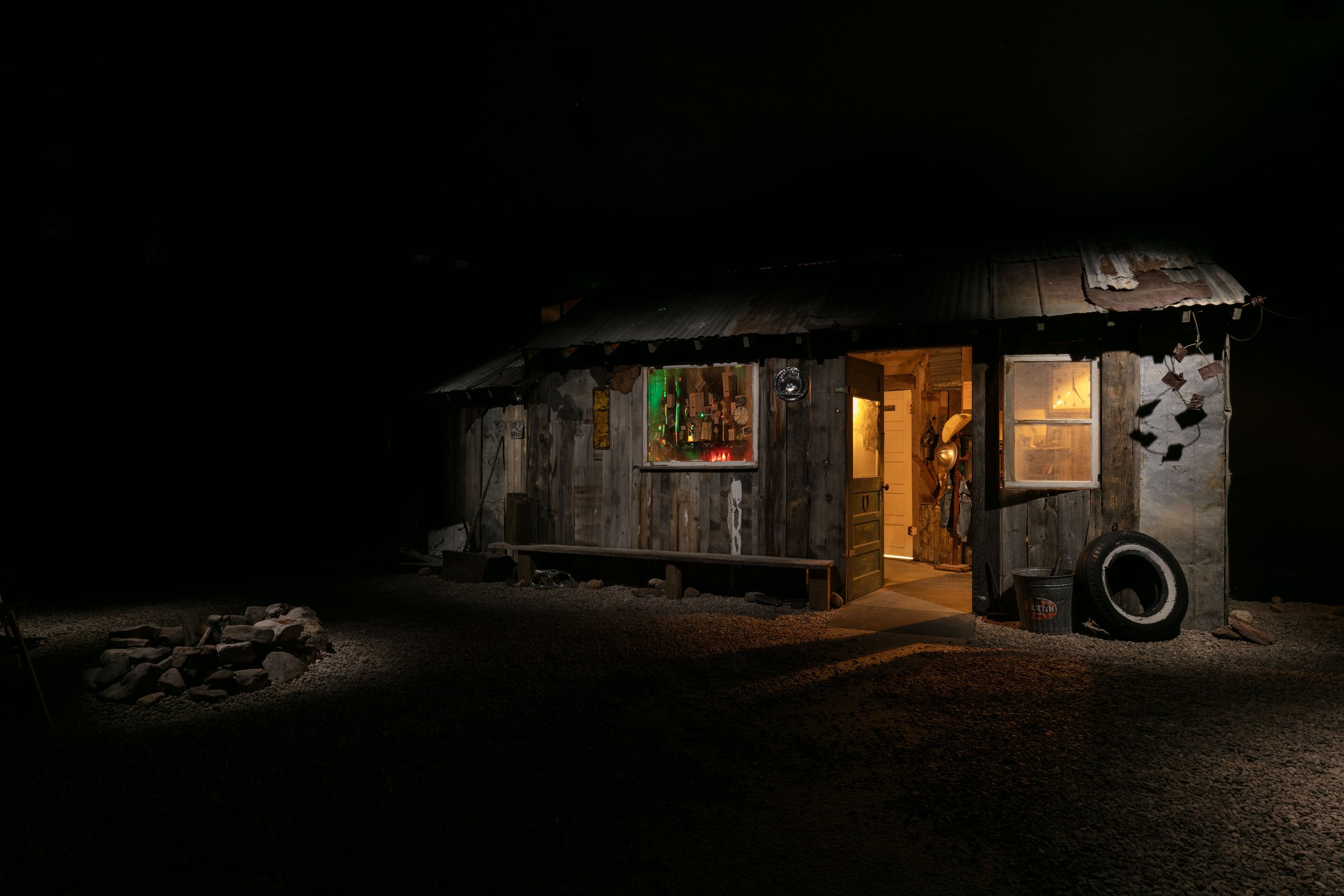
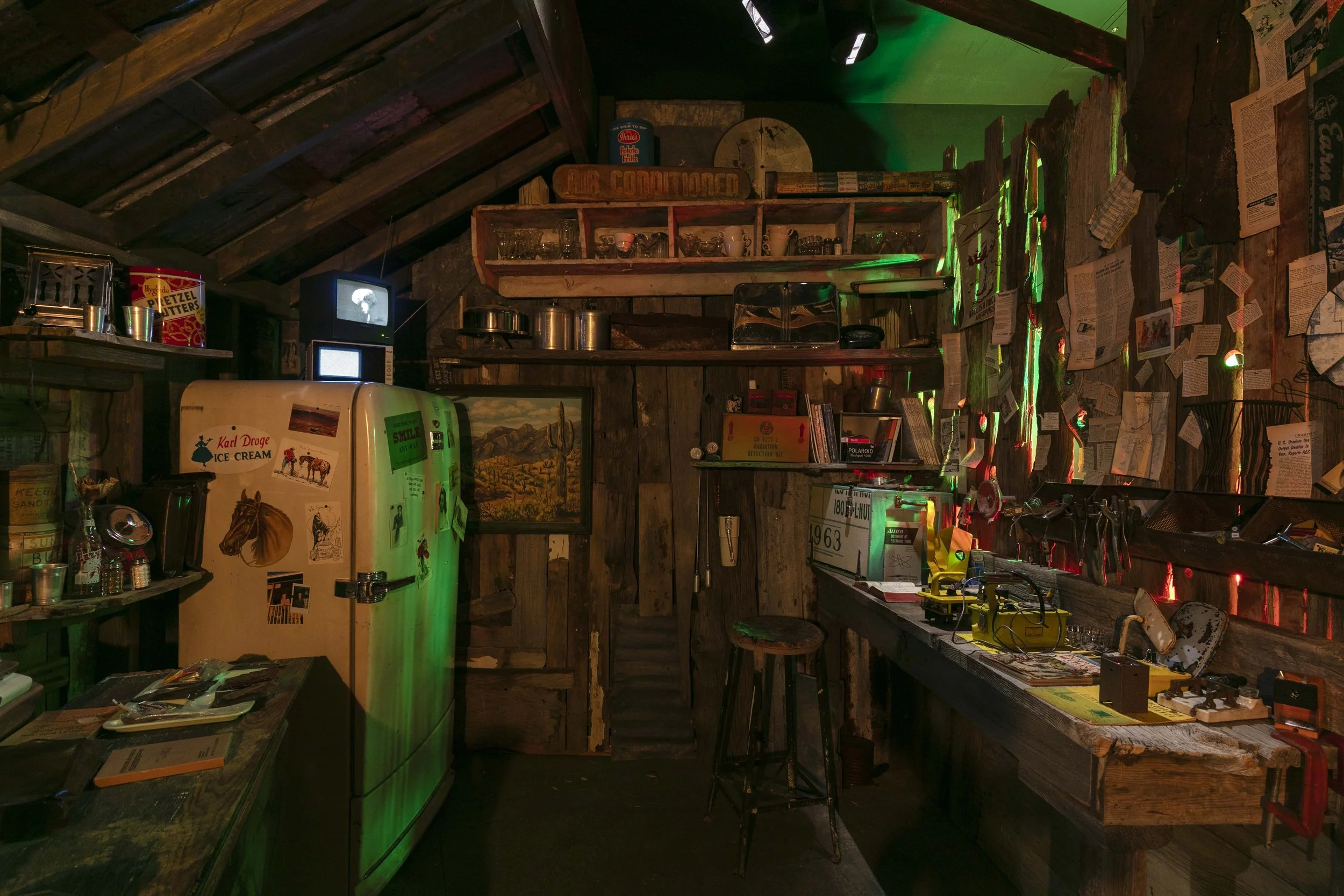
As I gently shift the heavy black curtain and take a step, surprised by the crunch of gravel beneath my feet, letting my eyes adjust to the dim light, breathing in the dusty, cool, desert evening air, “Where the Heck is Yucca Fountain?” is not the question that comes to my mind. Instead, I wonder, “Where am I?”
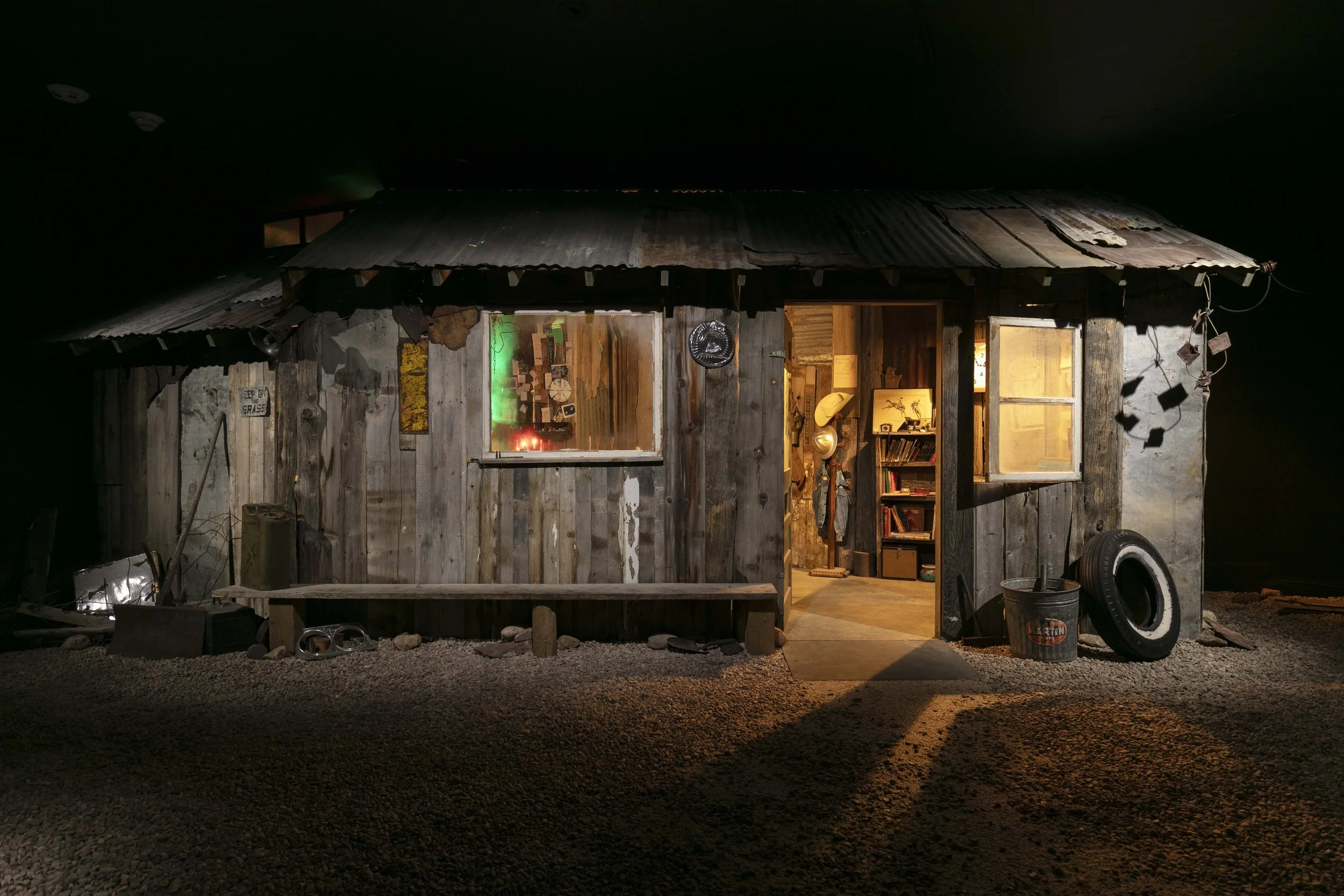
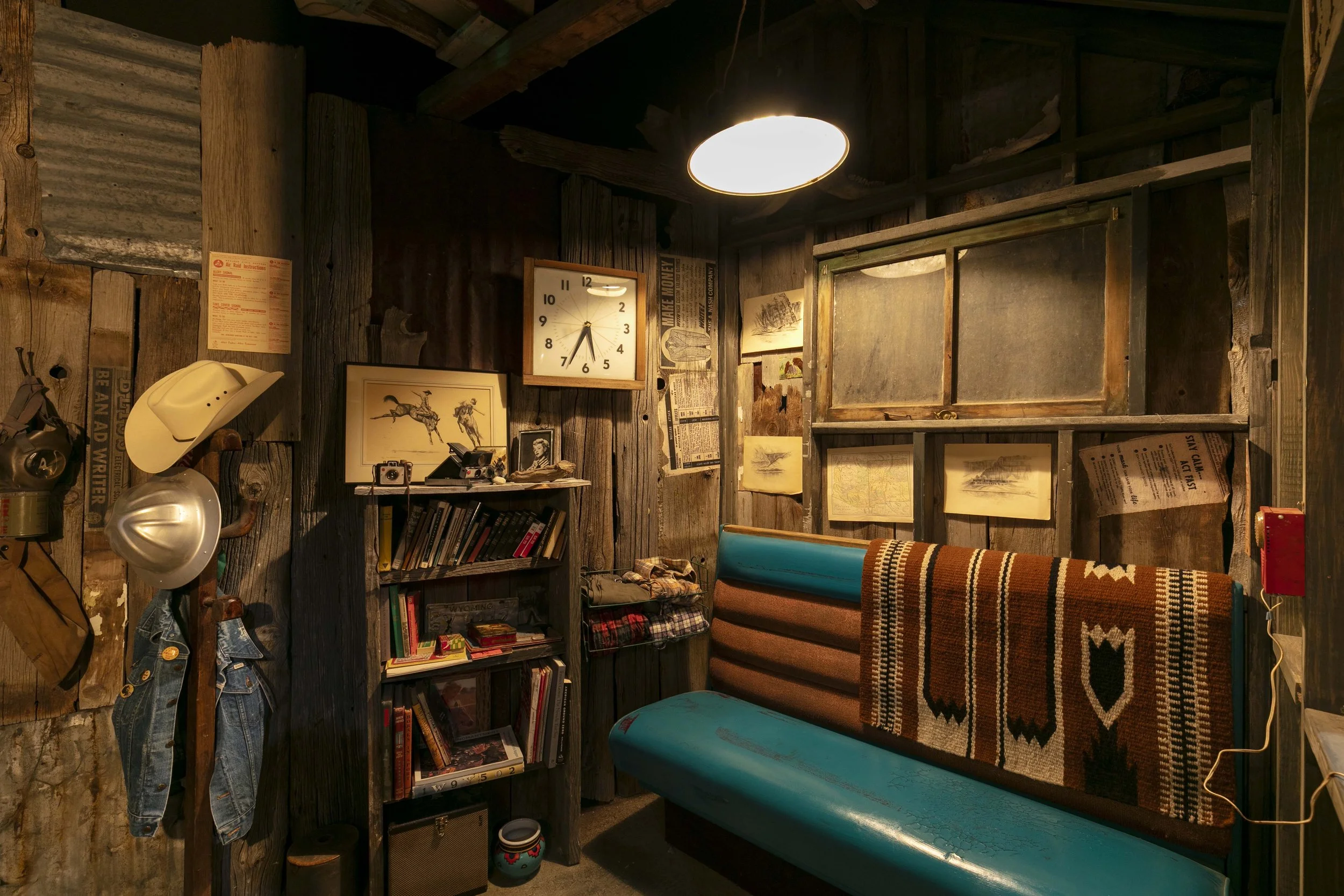
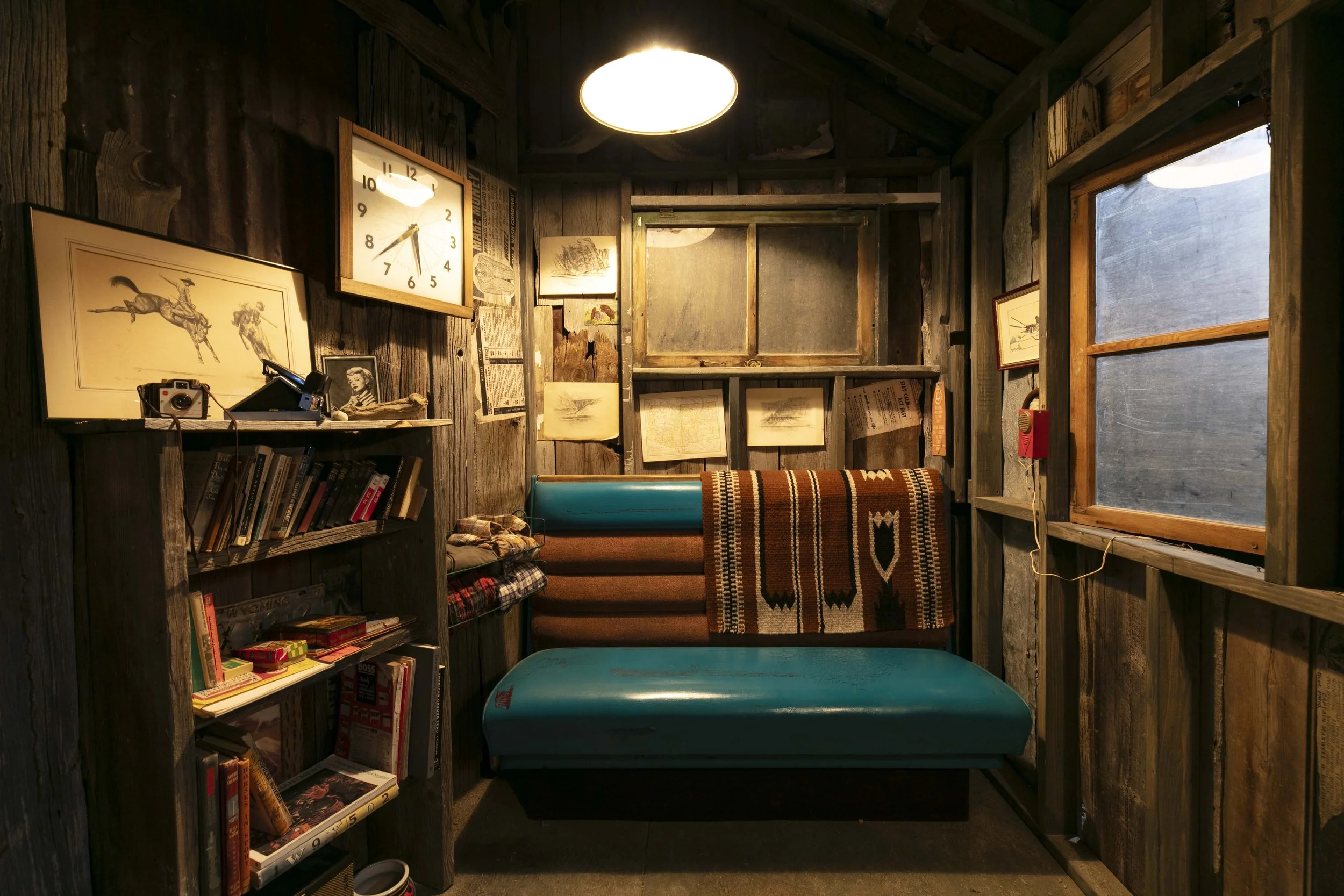
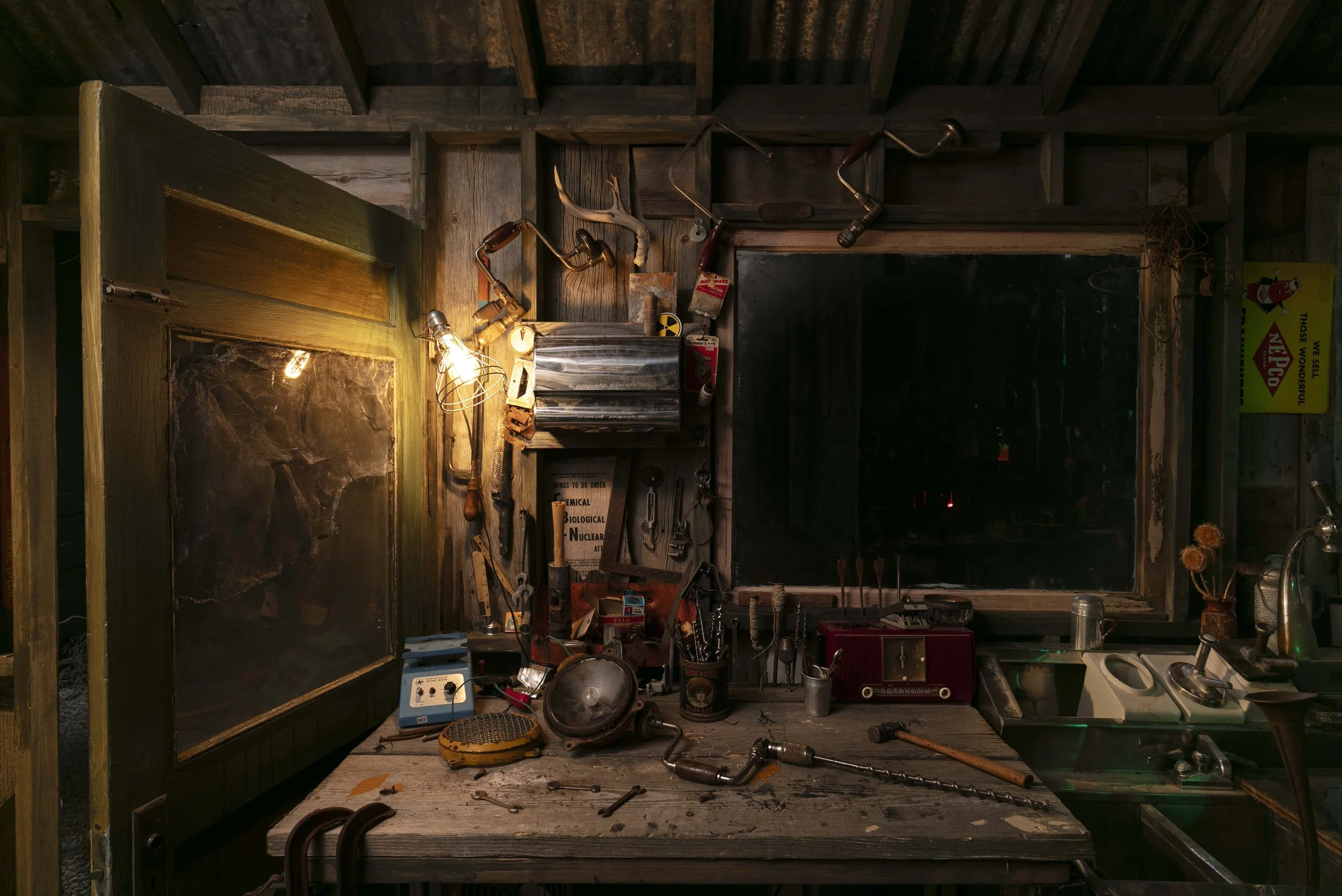
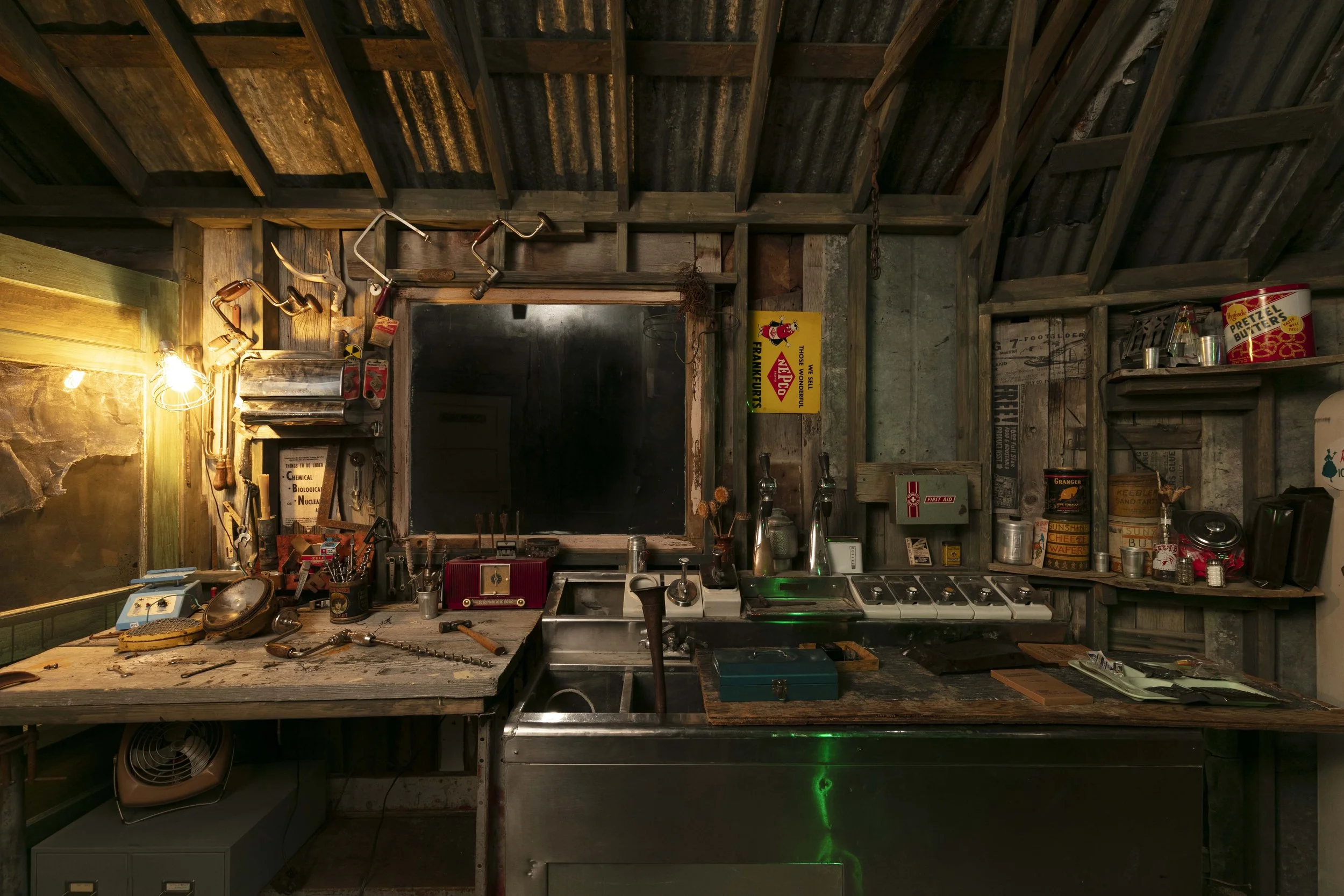
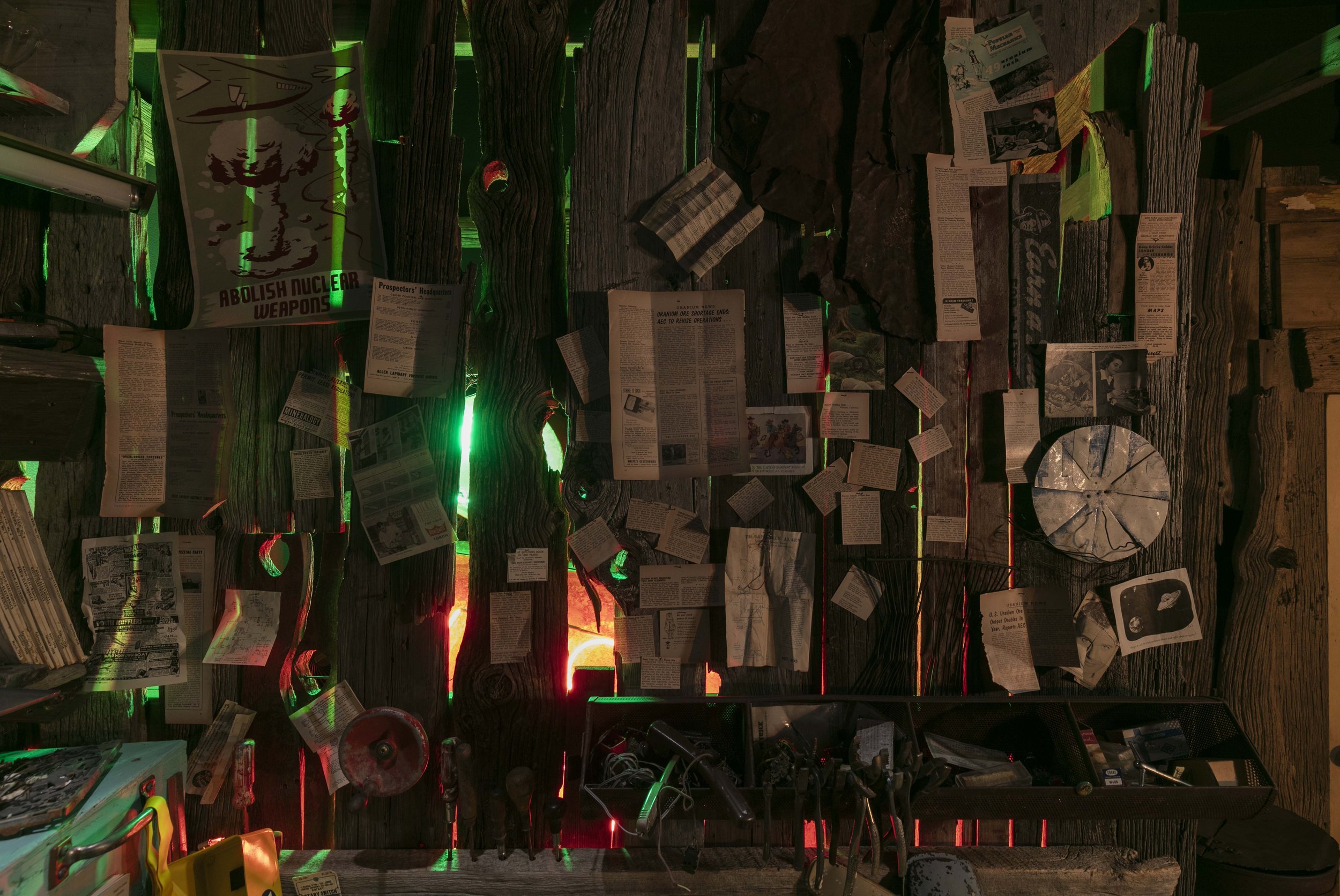
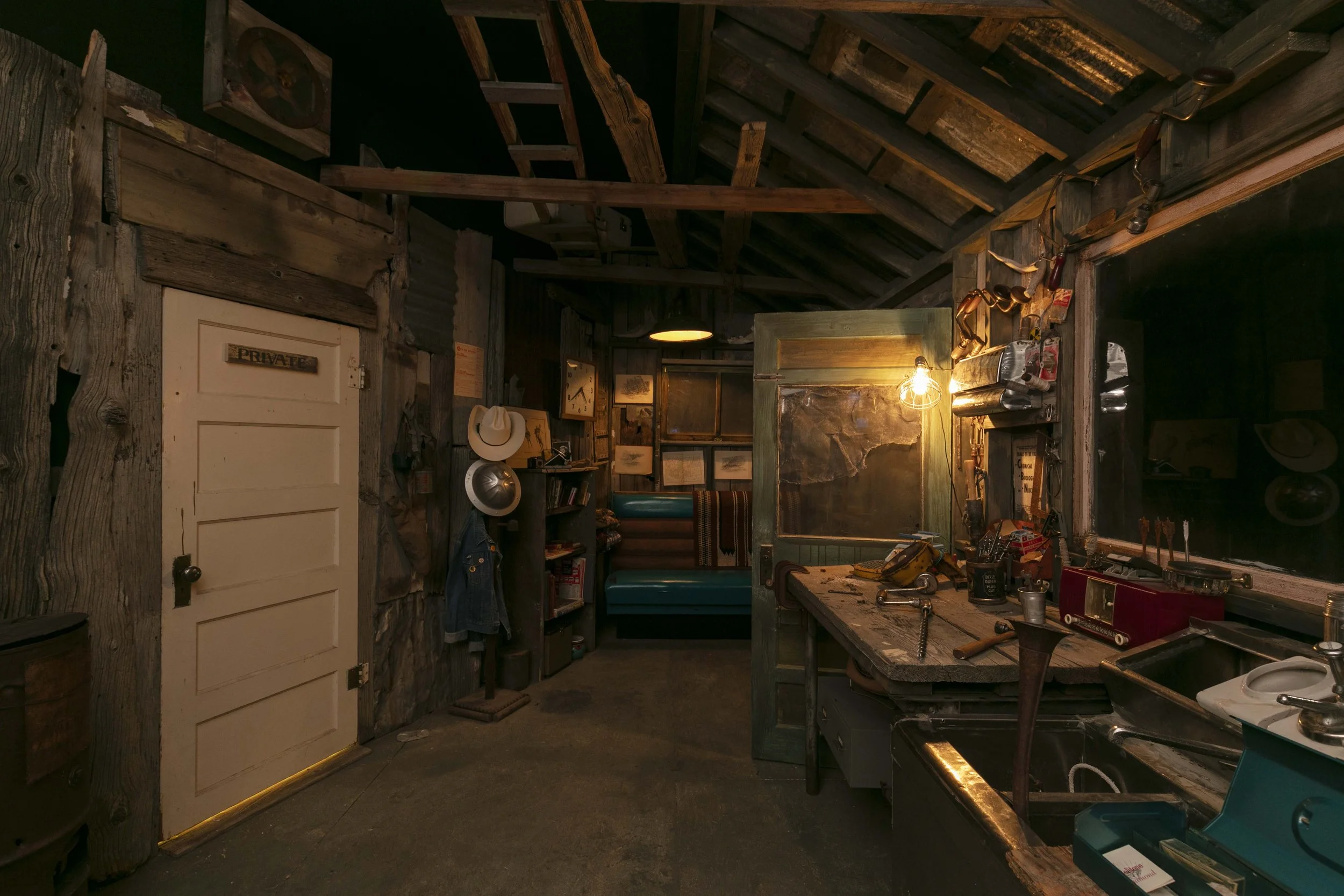
The first time I walked into the re-creation of Bert Tuttle’s desert workshop, I felt a sense of reverence, wonder, and unease. I delighted in the scale and playfulness of the tactile experience. I wanted to decipher the materials as clues and turn patterns into meaning, but couldn’t quite land on any conclusions. It was clear there were messages that meant something to someone, but the full picture would likely remain a mystery to me. Like the artists in their initial encounter in the Nevada desert, I was a visitor in this place, having stumbled upon it. I was enchanted, and increasingly aware that my presence here will be temporary, my understanding partial.
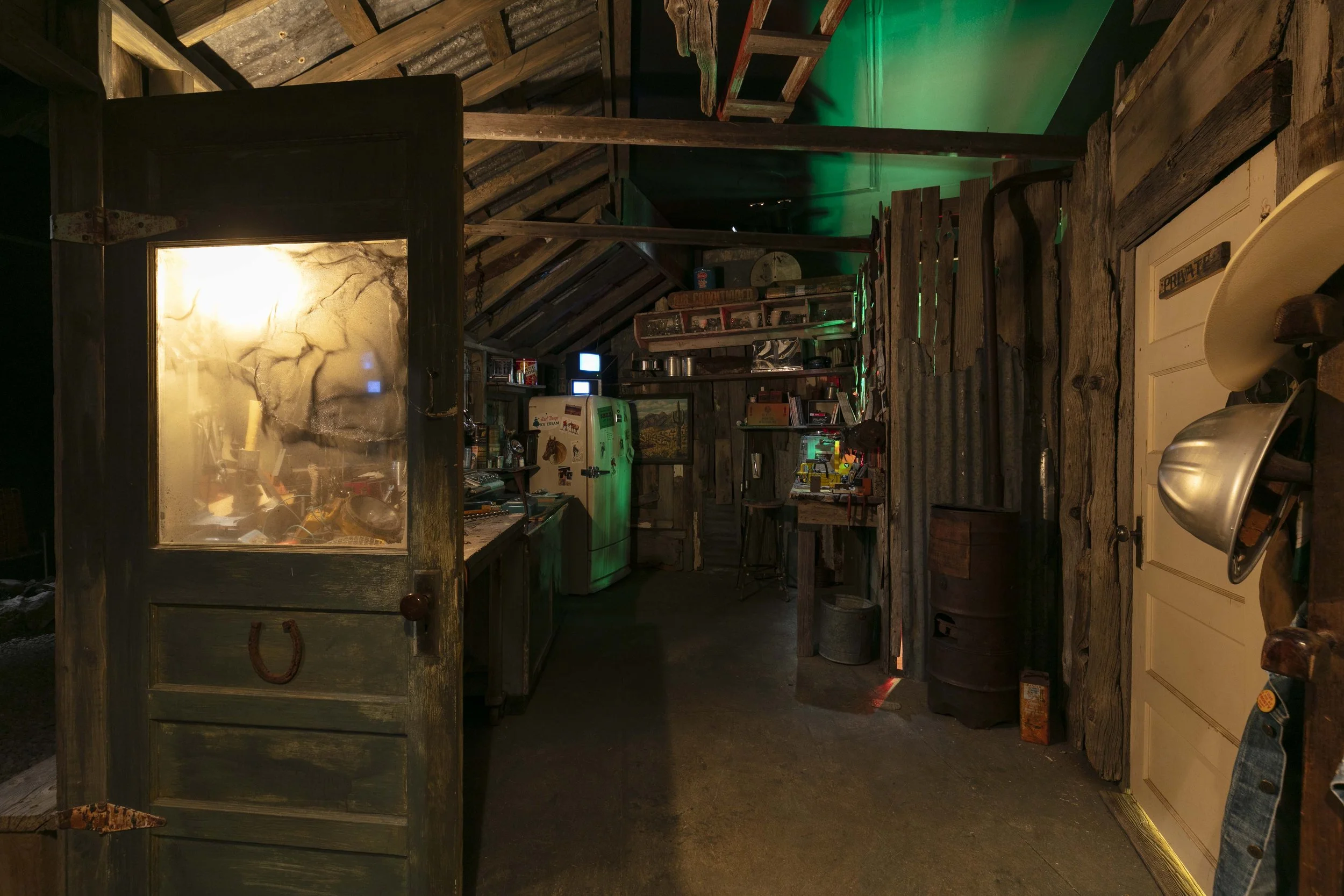
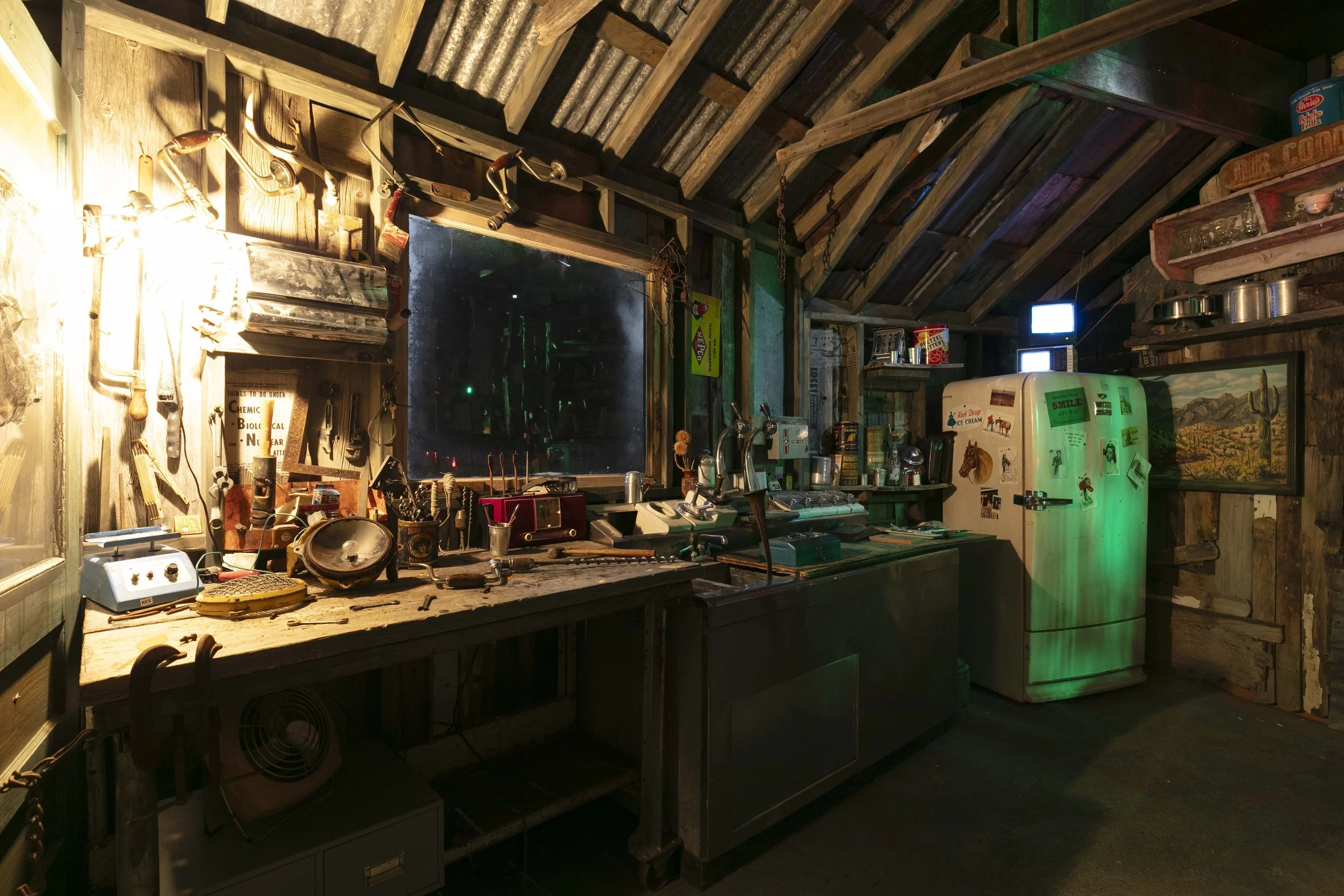
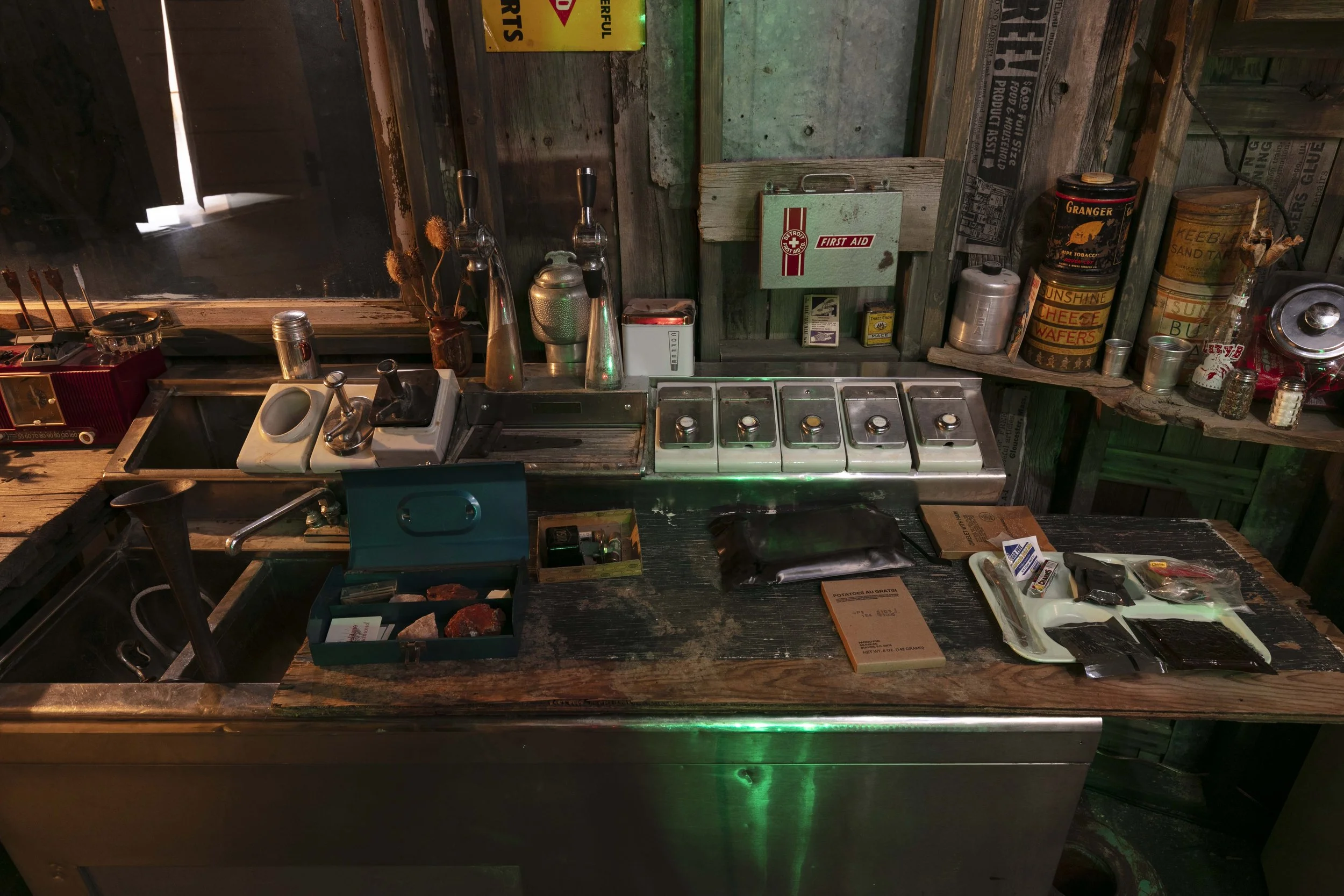
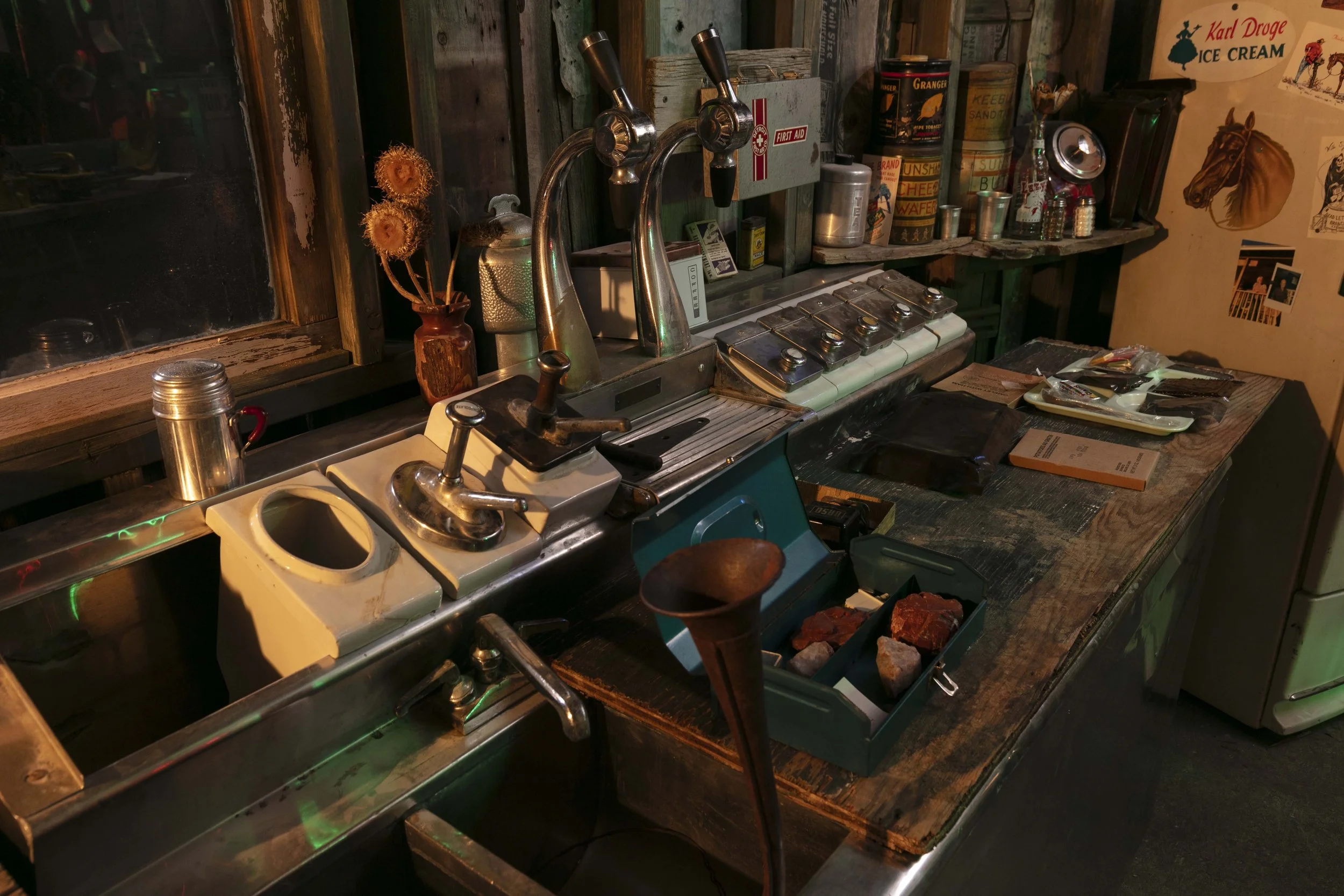
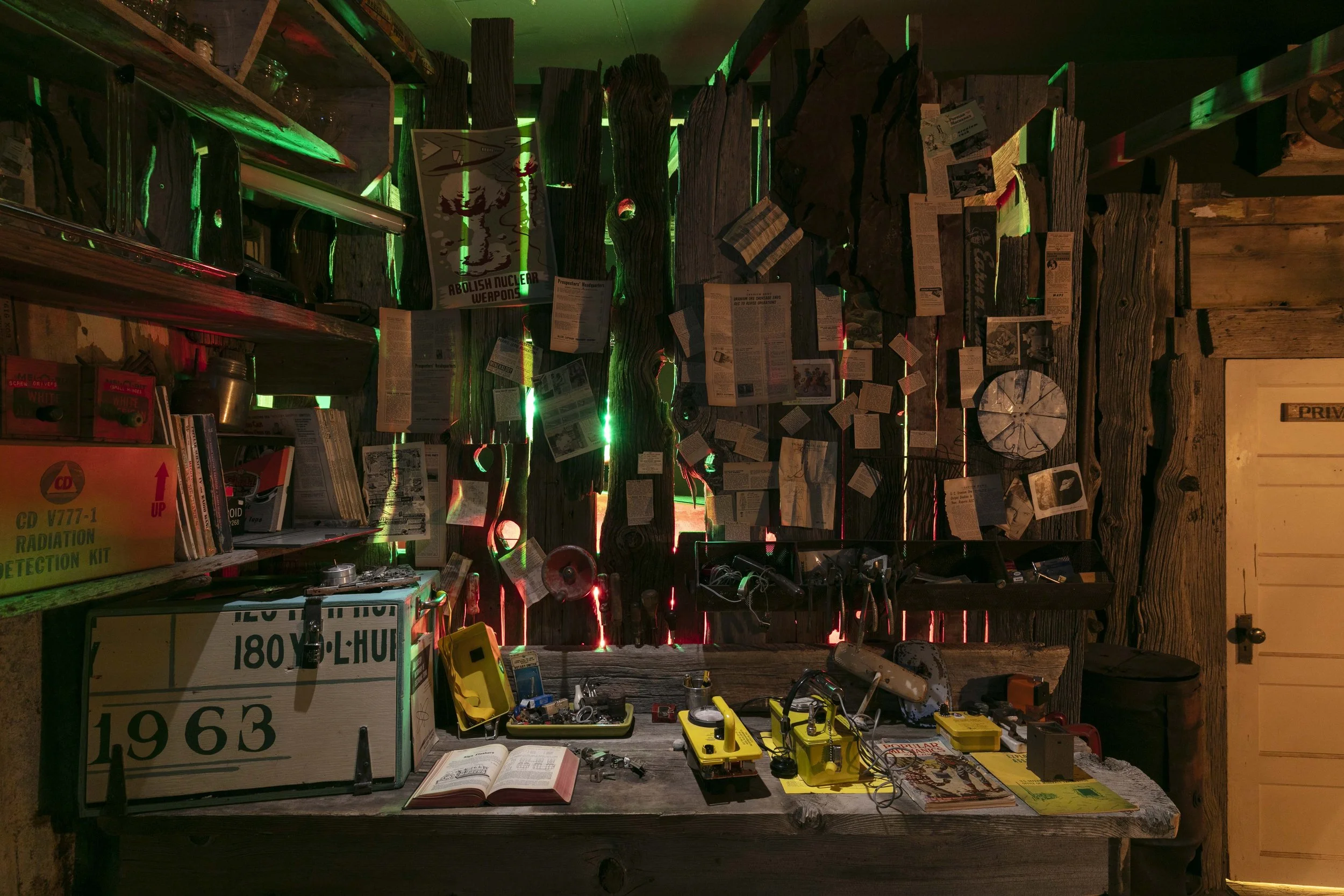
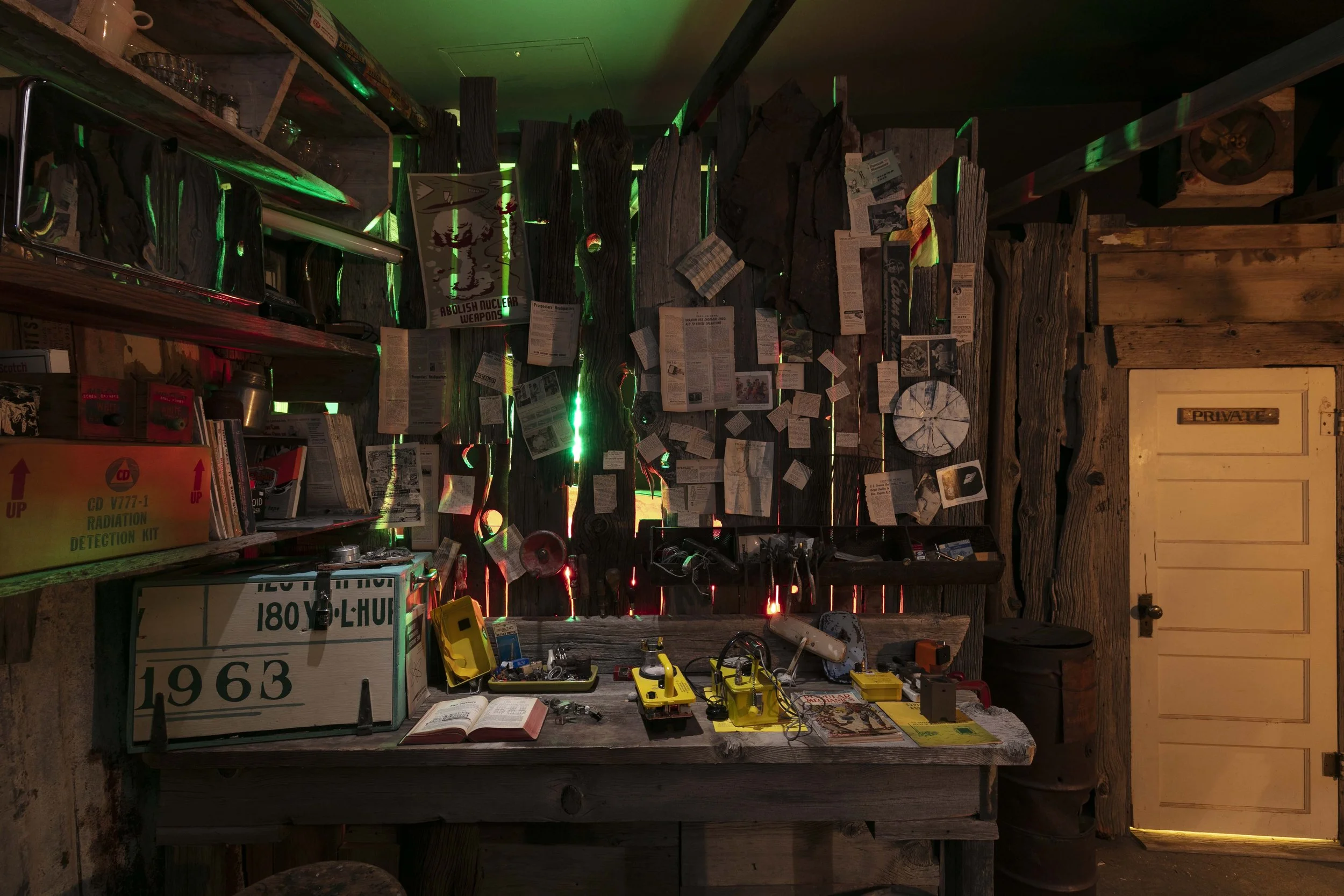
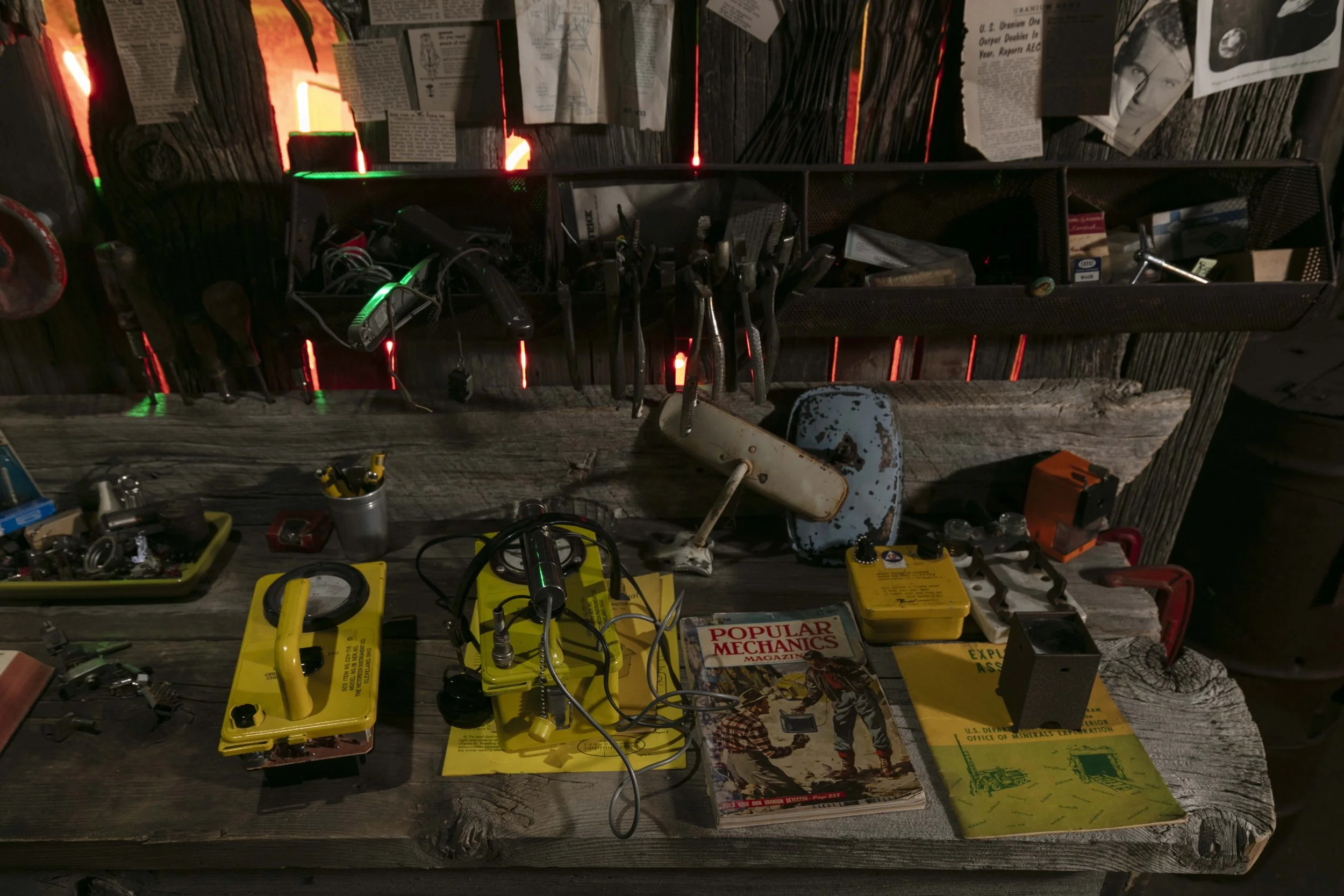
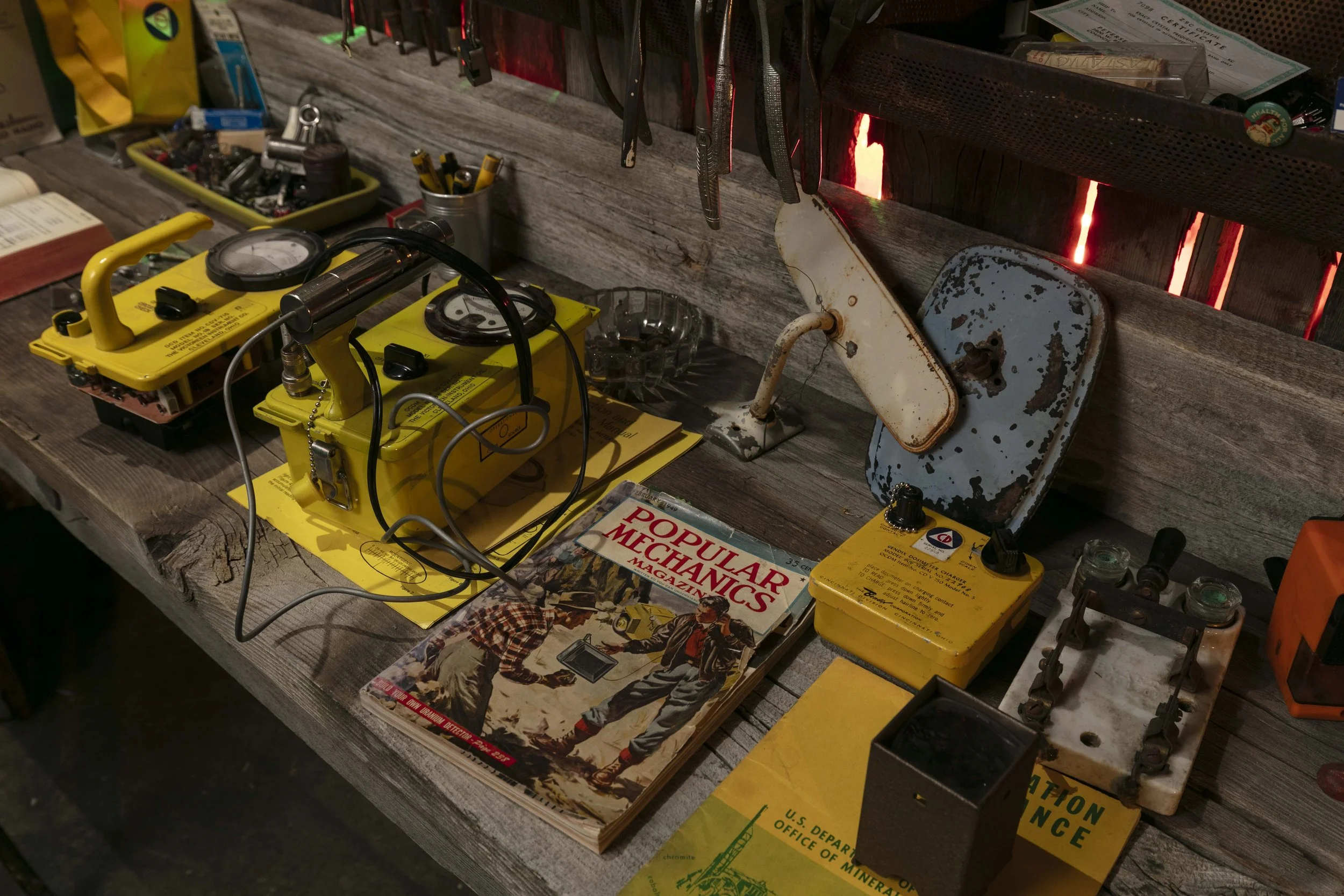
The workshop is an assemblage and a celebration of paradoxes: elements of archive intermix with mirage; cheery 1950s nostalgia is tinged by looming atomic fallout; a curiosity cabinet filled with relics as authentic as they are dubious. The bones of the building have provenance that imbues the space with a visceral, lived-in energy. The ranch north of Laramie—where so many of the raw materials were sourced—is present here as well, adding texture and layers of relationships past and present. This incarnation of Bert’s workshop is of the place. The harsh Wyoming wind and sun shaped the wood now shielded in the dim light, and the pot-belly stove in the corner would heat right up if you lit a fire inside. The tools strewn on the workbench are rusty, but they work, and from the inside looking out through the windows, framed in peeling paint, I swear I can almost see the Snowy Range rising from the Laramie Valley.
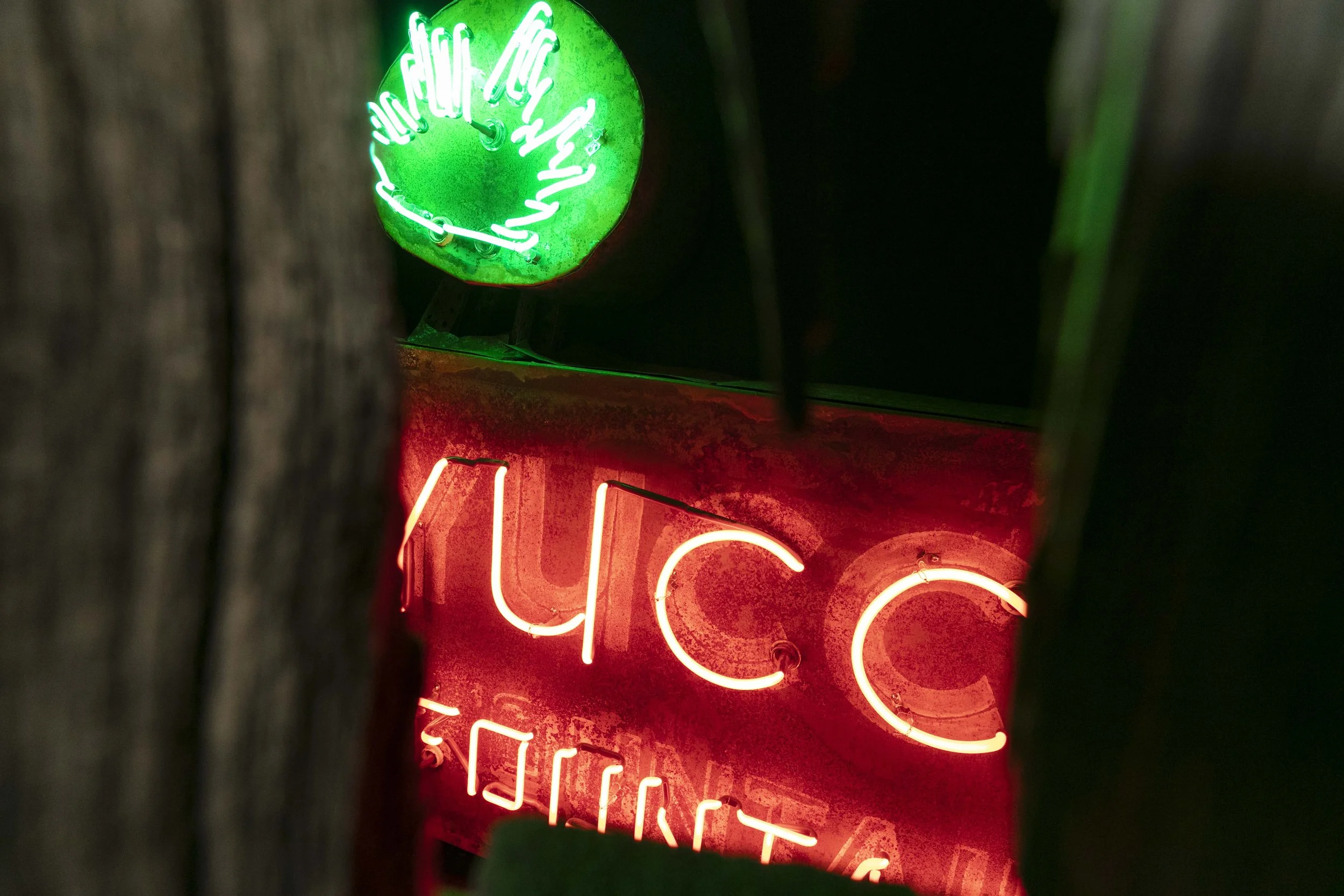
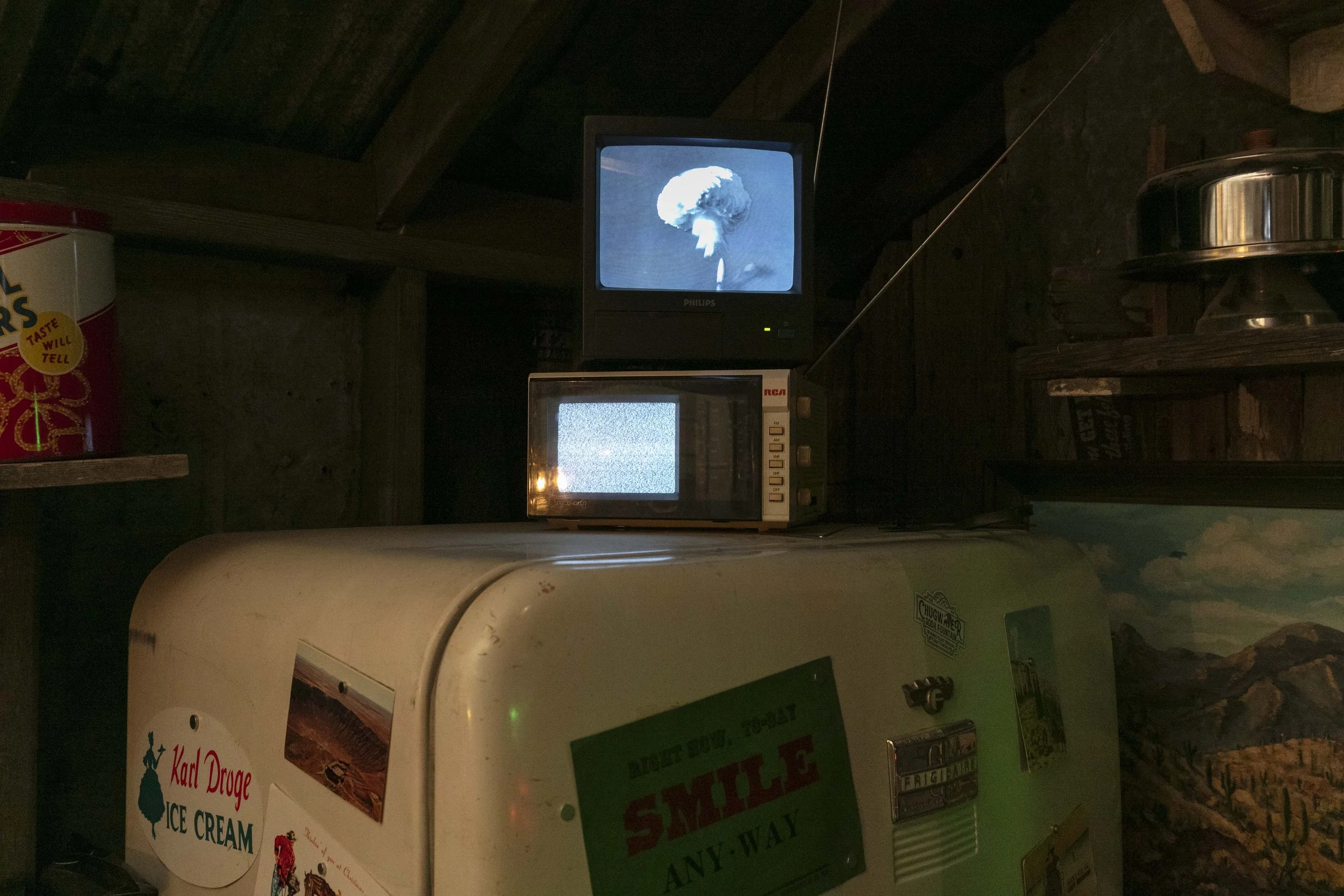
The soundscape fills in an even broader sense of place, expanding the scope from the hyperlocal—is that the actual Yucca Fountain sign casting the neon glow in the kitchen?—to the adjacent landscape that extends into the darkness. Coyotes yip, trains rumble, and sooner or later, the building itself absorbs the energy from a not-so-distant explosion. The small TV flickers with atomic bomb detonations on repeat, a looping reminder of the always-looming threat that (maybe) consumed Yucca Fountain, and might, someday, consume us.
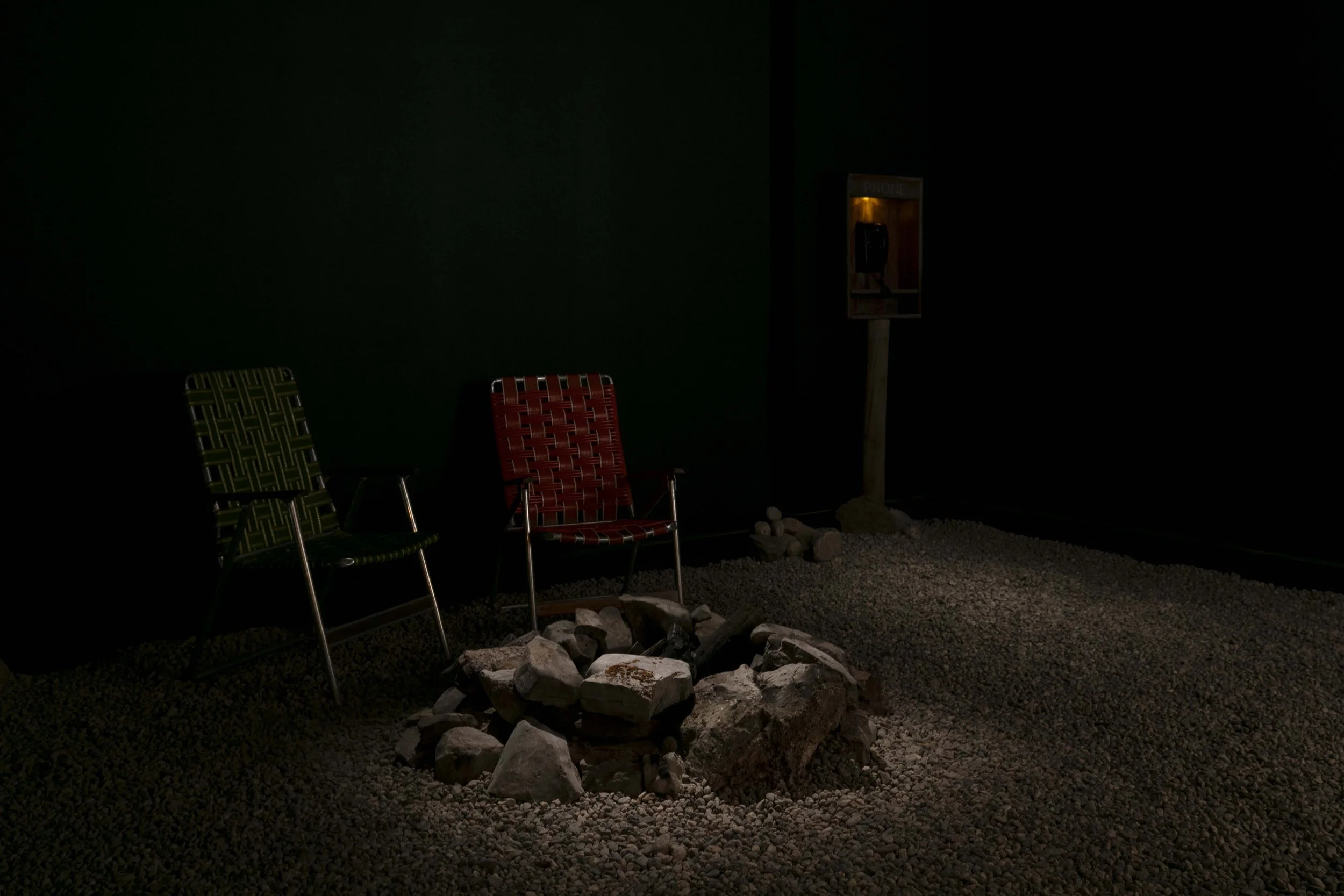
The experience of place inside the gallery is simultaneously grounded and unsettling; immersive and alienating; quiet and disquieting. Spending time here, I can feel its throwntogetherness—the energy and presence of everyone and everything before me and of those still to come. It’s as if Bert is just out of sight and could return at any moment, the rocks of the fire ring still warm to the touch. Any minute now the crickets will fade away and another blast will shake the floorboards, the radius creeping closer than before.
An ever-shifting constellation of trajectories
In Savage Dreams, Rebecca Solnit writes about the cultural, environmental, and political legacies of violence on landscapes of the American West, including the resistance and resilience of people living within the nuclear shadow of the Nevada Test Site. “Places teach us, if we let them. The places themselves were where conversations, histories, research, ideas, activism, ecologies converged—or, rather, a place is a point of intersection for these forces”(1994; 2014). The lessons that places can teach us are complex and contested: places are precarious and heterogenous. Co-creating meaning in place challenges us to embrace paradox and plurality, and resist the urge to be fixed and final. Where the Heck is Yucca Fountain? brings this contested, shifting sense of place into sharp relief as it refuses to validate claims of certainty while inviting each of us to make meaning together through direct experience in places constructed and real, all at the same time. Whether feeling the atomic wind blow through gaps in the wooden slats of the workshop, paging through notebooks in the mobile lab, or sipping coffee with friends in the Yucca Fountain booth at the satellite installation across town at Sunshine Coffee, we are invited to be present with the past and the future in all these places, all at once.
Questions of place should feel slippery—it’s dangerously easy to parochialize, exclude, simplify, or romanticize an imagined, pristine, or timeless past as we seek to make meaning in a place. But what is truly special about place, cultural geographer Doreen Massey says, is “precisely that throwntogetherness, the unavoidable challenge of negotiating a here-and-now, and a past and future” all at once (2005). Place is a concept both commonsense and abstract: there are dozens of definitions across as many disciplines and fields. Australian philosopher Jeff Malpas calls place “perhaps the key term for interdisciplinary research in the arts, humanities, and social sciences in the twenty-first century” (2010), and he argues that place is foundational to human identity and consciousness, seeing our embodiedness in environments as deeply linked to our understanding of the world (2018).
Embracing this plurality, one of my favorite definitions of place comes from Massey. She describes place as “unfinished and open,” an “ever-shifting constellation of trajectories” (2005). I always hear that as a kind of poem. To understand place as open and changing allows us to seek patterns that become maps of meaning—constellations. We can conceptualize that the light we see now as stars has traveled so far across space and time that it may not simultaneously exist as light at the source, and yet it is visible to us here, now. We can connect those points of light and learn lessons from the stories we tell about their relationships to one another. We can embrace the dynamic motion of ourselves and all others across space and time—our trajectories—while still feeling the steadiness of our feet on the Earth.
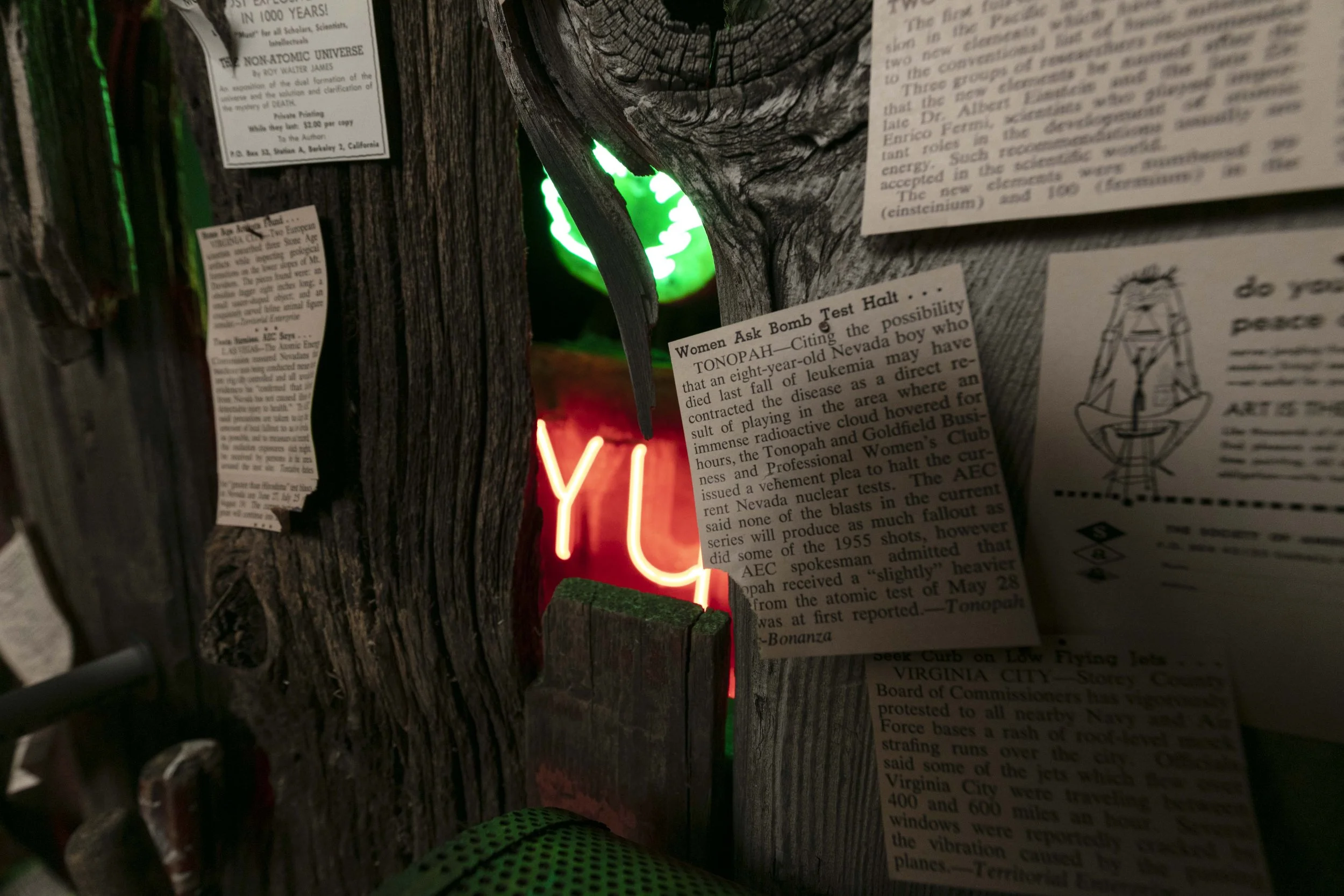
Massey and Haraway are in conversation with one another, particularly aligned in seeing space and place as situated and constitutive: the “making-with” of sympoiesis carries with it an imperative of “becoming involved in one another's lives" (Haraway 2016). When we step into Where the Heck is Yucca Fountain?, we are activated, involved, and inevitably asked to situate ourselves as co-creators and meaning-makers. All at once we are in Bert’s cabin in the Nevada desert at the edge of an atomic bomb test site, and inside the walls of the Centennial Complex in Laramie. Surrounded by re-assembled remnants of Middle Creek Ranch, touching relics real and fabricated (which are which!?), feeling the shaking ground and touching the flannel shirts, reading anti-nuclear pamphlets through a trophy case while our skin sticks to the teal vinyl booth…these tactile ephemera invite us to be active: to make with. To feel the throwntogetherness. To negotiate the here-and-now alongside the past and future.
What makes a place? We do. Together. We make meaning in relationship: laminating ourselves within layers of meanings assembled over time. If Yucca Fountain really existed, it also appears now as a mirage, consumed by heat, promising temporary, but welcome, relief. It reminds us that our presence here is momentary and our understandings partial, yet we are bursting with meaning. While we are here, now, let’s make this place together, and find ourselves and one another within it.
About Our Resurrection
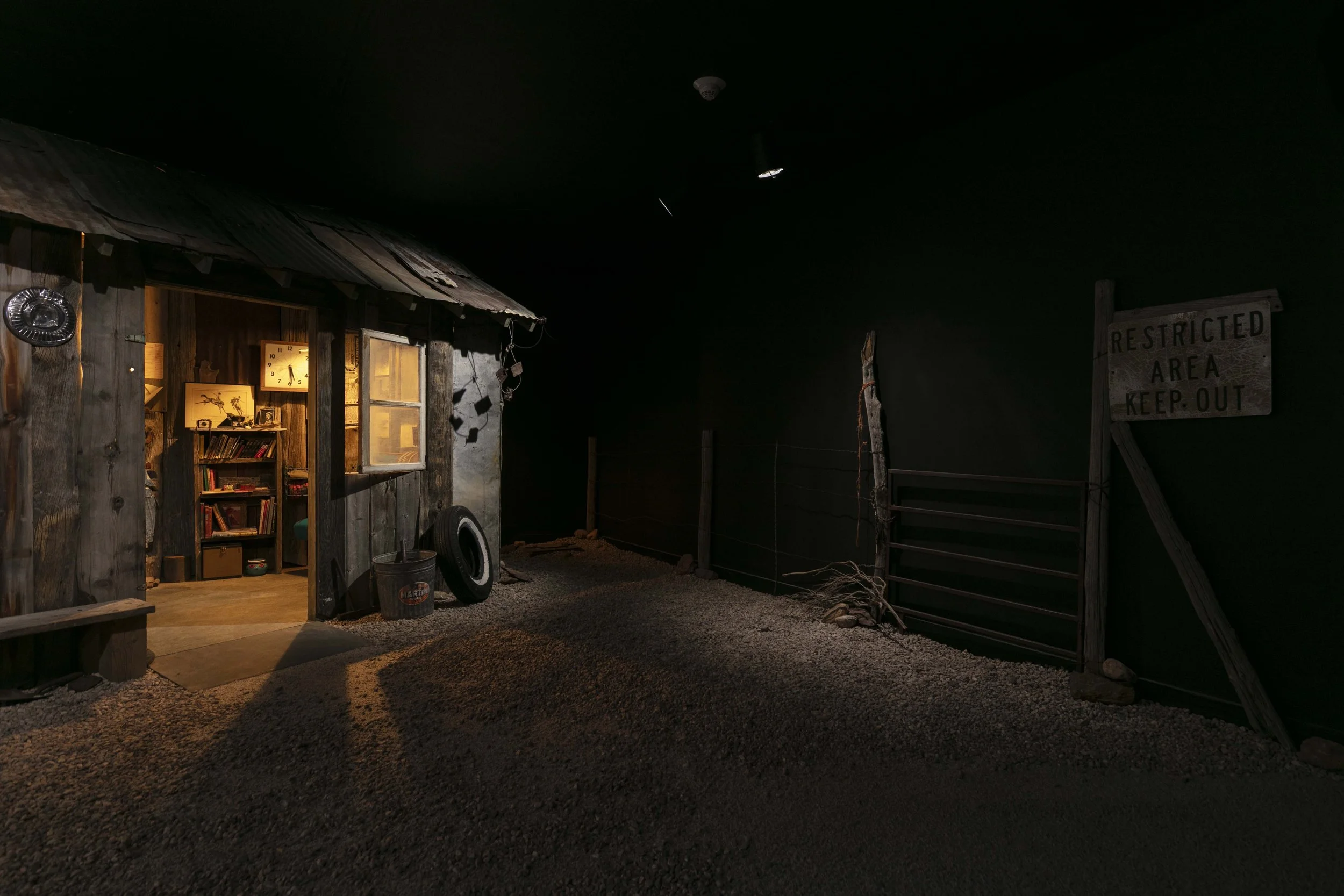
Where The Heck is Yucca Fountain? totally transformed the UWYO Gallery over three weeks during the summer of 2025. What began as an 650 square foot white-walled gallery was converted into a desert-scape and life-sized desert shanty/workshop.
The build-out included installing a sub-floor, metal roof, an entire building façade and interior walls, workbenches, counters, windows, lighting and a soundscape equipped with vibrating floors and blinking lights!
Outside the shanty, visitors could explore the Nevada desert at twilight. 3 tons of “squeegee” gravel, tumble weeds, a fire pit, a mysterious telephone booth, a bomb shelter hatch and fencing enticed visitors to investigate the mysteries of Yucca Fountain.
We look forward to bringing this installation to other galleries and museums around the country. Each full build out will be uniquely tailored to the available space.
THANK YOU!
We would like to acknowledge the hard work and persistence of Barry Stout. He’s the genius behind Where the Heck’s audio and visual effects. Thank you, Barry!
We’d also like to thank Middle Creek Ranch Inc. for their generous donation of salvaged materials. Not to mention preparators Stoney Smith and Anthony Teneralli for their encouragement, problem-solving, enthusiasm, and hard work. You guys are the BEST!
Sending a huge thank you to the entire University of Wyoming Art Museum team. We truly appreciate working with each and every one of you.
In The News-